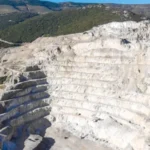
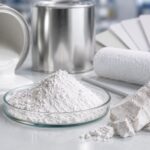
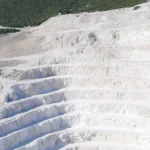
Types of lime are not a single material but a product family whose common raw material is limestone (calcium carbonate). In its broad sense, lime covers the calcium- and magnesium-based products obtained when limestone is heat-treated and slaked with water: quicklime, hydrated (slaked) lime, dolomitic lime and hydraulic lime. Each is used in a different sector for a different purpose.
In this guide we introduce the types of lime together with their chemical formulas; we cover the difference between quicklime and hydrated lime, the lime cycle, sectoral applications, agricultural liming, safety precautions, and the relationship between limestone and calcite. The content is aimed at users in construction, agriculture, water treatment and industry, as well as raw-material procurement teams.
Quick answer: The main types of lime are: limestone (CaCO₃, the raw mineral), quicklime / burnt lime (CaO), slaked / hydrated lime (Ca(OH)₂), dolomitic lime (magnesium-bearing) and hydraulic lime (sets under water). They all start from calcium carbonate; what separates them is the heat treatment applied and the reaction with water.
What Is Lime? From Limestone to Lime
Lime, in the broad sense, is the common name for calcium- and magnesium-based inorganic materials. The types of lime are sub-groups of this large family. The source of every lime type is limestone rock, which is composed mainly of calcite. For the properties of the calcite mineral and its relationship to limestone, see our what is calcite guide.
When limestone is fired at roughly 900-1,100 °C (calcination), carbon dioxide is driven off and quicklime (CaO) remains. Adding water to this product triggers a vigorous reaction that forms slaked lime (Ca(OH)₂). Slaked lime slowly reabsorbs carbon dioxide from the air and turns back into limestone. This three-stage cycle is called the lime cycle.
- Calcination: CaCO₃ → CaO + CO₂ (heat applied)
- Slaking (hydration): CaO + H₂O → Ca(OH)₂ (heat released)
- Carbonation: Ca(OH)₂ + CO₂ → CaCO₃ + H₂O (hardening)
This cycle explains why the products among the types of lime behave so differently: they are made of the same elements but exist in different chemical phases.
Types of Lime Comparison Table
| Lime Type | Chemical Formula | Also Known As | Primary Use |
|---|---|---|---|
| Limestone | CaCO₃ | Calcareous rock, raw lime | Aggregate, cement, agriculture, filler |
| Quicklime | CaO | Burnt lime, calcium oxide | Steel, chemicals, soil stabilization |
| Slaked lime | Ca(OH)₂ | Hydrated lime, calcium hydroxide | Construction mortar, plaster, water treatment |
| Dolomitic lime | CaO·MgO / Ca(OH)₂·Mg(OH)₂ | Magnesian lime | Agriculture (Mg source), refractory |
| Hydraulic lime | CaO + silicate/aluminate | NHL (natural hydraulic lime) | Restoration, underwater structures |
| Milk of lime / slurry | Ca(OH)₂ + water | Limewash, milk of lime | Limewash, disinfection, treatment |
What Is Quicklime (CaO)?
Quicklime is calcium oxide (CaO) obtained by calcining limestone. It is commonly known as “burnt lime.” It is a highly reactive material, ranging in colour from white to pale yellow.
Its most notable property is that it releases intense heat when it comes into contact with water (an exothermic reaction). For this reason it is the product among the types of lime that must be handled most carefully. Its main applications are:
- Iron and steel: A slag former and impurity remover (flux).
- Soil stabilization: In road and ground construction it dries clayey soil and increases its strength.
- Chemical industry: A raw material in the production of calcium carbide, calcium hydroxide and many other chemicals.
- Sugar industry: Used to purify the sugar juice.
What Is Slaked Lime (Ca(OH)₂)?
Slaked lime is calcium hydroxide — Ca(OH)₂ — obtained by the controlled slaking of quicklime with water. It is also called hydrated lime. It is far more stable and safer than quicklime, which makes it one of the leading types of lime used directly in construction and agriculture.
- Construction: As a binder and workability additive in mortar, plaster and limewash.
- Water and wastewater treatment: pH adjustment, softening and disinfection.
- Flue-gas treatment: Capture of sulphur dioxide (SO₂).
- Agriculture: Soil pH adjustment and disinfection (milk of lime/limewash).
The Difference Between Slaked Lime and Quicklime
Among the types of lime, the pair most often confused is slaked lime and quicklime. Both come from limestone, but one is an oxide (CaO) and the other a hydroxide (Ca(OH)₂):
| Property | Quicklime | Slaked Lime |
|---|---|---|
| Formula | CaO | Ca(OH)₂ |
| How it is obtained | Firing of limestone | Slaking of quicklime with water |
| Reaction with water | Vigorous, releases high heat | Already slaked, stable |
| Reactivity | Very high | Moderate |
| Handling safety | Risky (must be kept from moisture) | Safer |
| Typical use | Steel, chemicals, soil improvement | Mortar, plaster, water treatment |
Limestone and Calcite: The Source of the Types of Lime
Limestone is the raw material of all types of lime and consists mainly of the calcite mineral (CaCO₃). However, limestone is not only converted into lime — it is also used directly:
- Aggregate: In asphalt and concrete plants at sizes such as 0-5, 5-12 and 12-22 mm.
- Cement: The main raw material for clinker production.
- Agricultural lime: Ground limestone as a soil pH regulator.
- Micronized filler: Ground very finely, it becomes a filler in paint, plastic and paper.
The key distinction here is this: limestone and ground calcite are in the carbonate (CaCO₃) form, whereas slaked lime and quicklime are in the oxide/hydroxide form. In other words, every calcite is a lime raw material, but not every “lime” product is calcite. You can find the difference between calcite and its magnesium counterpart in our calcite and dolomite difference guide, and the importance of grinding fineness in our micron size guide.
Dolomitic and Hydraulic Lime
Alongside the main products that can be counted among the calcitic types of lime, there are two more special lime types:
- Dolomitic lime: Produced from magnesium-bearing dolomite stone; it supplies both calcium and magnesium. It is preferred on magnesium-deficient soils and in refractory applications. For the difference between dolomite and calcite, see our calcite and dolomite guide.
- Hydraulic lime (NHL): Thanks to the silicates and aluminates it contains, it can set under water and in damp environments. It is used in the restoration of historic buildings and in structures in contact with water.
Sectoral Applications of the Types of Lime
| Sector | Lime Type Used | Purpose |
|---|---|---|
| Construction | Slaked lime, hydraulic lime, limestone aggregate | Mortar, plaster, limewash, concrete, fill |
| Iron and steel | Quicklime, dolomitic lime | Slag formation, impurity removal |
| Water/wastewater treatment | Slaked lime, milk of lime | pH adjustment, disinfection, precipitation |
| Agriculture | Limestone (calcitic/dolomitic), slaked lime | Soil pH adjustment, calcium source |
| Chemical industry | Quicklime and slaked lime | Chemical production, neutralization |
| Sugar/food | Quicklime | Juice purification |
| Environment / flue gas | Slaked lime | Capture of SO₂ and acid gases |
| Paint/plastic/paper | Micronized calcite (CaCO₃) | Filler and pigment extender |
Types of Lime in Agriculture: Which One Should Be Used?
Among the types of lime used in agriculture, the most common is ground limestone (agricultural lime). This is because it is a safe, slow-release product that does not burn the soil. Slaked lime and quicklime act much faster and more aggressively; at the wrong dose they can harm soil life.
- Calcitic agricultural lime (CaCO₃): Supplies calcium and raises pH; preferred on soils with sufficient magnesium.
- Dolomitic agricultural lime: Supplies both calcium and magnesium; used on magnesium-deficient soils.
Particle fineness is critical in agricultural liming: the more finely the material is ground, the larger the reaction surface and the faster the pH effect appears. You can review our agriculture and livestock solutions on our agriculture and livestock page.
Safety in the Use of Lime
Among the types of lime, the product that demands the most attention in terms of safety is quicklime (CaO). It reacts vigorously with water and releases high heat; it can cause burns to the skin and eyes. The precautions to take are:
- Store quicklime in a dry environment, away from moisture and water.
- Use gloves, goggles and a dust mask.
- Carry out the slaking process in a controlled, ventilated environment.
- Although slaked lime is safer, it is still alkaline and therefore requires protective equipment.
Types of Lime and Their Chemical Formulas
The most fundamental thing that distinguishes the types of lime from one another is their chemical formulas. They all start from limestone (calcareous rock) and, through heat and water, turn into different compounds. The table below summarizes the formulas of the types of lime and how they are obtained:
| Product | Chemical Formula | How Is It Obtained? |
|---|---|---|
| Limestone / Calcareous rock | CaCO₃ | Natural sedimentary rock (raw material) |
| Quicklime (calcium oxide) | CaO | Calcination: CaCO₃ → CaO + CO₂ (~900 °C) |
| Slaked lime (calcium hydroxide) | Ca(OH)₂ | Slaking: CaO + H₂O → Ca(OH)₂ |
| Dolomitic lime | CaO·MgO / Ca(OH)₂·Mg(OH)₂ | Calcination of dolomitic limestone |
| Hydraulic lime | CaO + clay/silica components | Firing of clayey (siliceous) limestone |
In short, the formula of limestone is CaCO₃, that of quicklime is CaO, and that of slaked lime is Ca(OH)₂. For the general properties of limestone (calcareous rock), see our what is limestone guide.
The Lime Cycle: From Limestone to Lime and Back
The types of lime convert into one another within a closed loop; this is called the lime cycle. The cycle begins with natural limestone and returns to limestone again:
- Calcination: Limestone is heated, carbon dioxide is released and quicklime forms — CaCO₃ → CaO + CO₂.
- Slaking: Quicklime reacts with water and turns into slaked lime — CaO + H₂O → Ca(OH)₂ (this reaction releases heat).
- Carbonation: Slaked lime reacts with the carbon dioxide in the air, turning back into limestone and hardening — Ca(OH)₂ + CO₂ → CaCO₃ + H₂O. The setting of mortar and plaster relies on this step.
This cycle explains why lime has been used as a binder in construction for thousands of years: the applied slaked lime slowly petrifies again in the air. For the conversion of limestone into industrial filler products, grinding is used instead of the cycle; for details, see our micronized calcium carbonate page.
Aydın Madencilik Limestone and Calcite Products
Aydın Madencilik produces limestone (CaCO₃) — the starting point of the types of lime — and high-purity micronized calcite. All of its raw-material needs are met from its own licensed sites. Our product range consists of products in the carbonate (CaCO₃) form; slaked lime or quicklime (CaO / Ca(OH)₂) is not produced.
| Product Group | Form | Typical Use |
|---|---|---|
| Limestone aggregate | 0-5 / 5-12 / 12-22 mm | Asphalt plants, concrete plants |
| Calcite stone | Granular / coarse | Agriculture, feed, industrial feeding |
| Micronized calcite | 3 – 100 µm | Paint, plastic, masterbatch, paper, construction chemicals |
| Coated calcite | 3 – 20 µm (K series) | High-filler polymer systems |
You can review the entire product range on our limestone page and our micronized calcium carbonate page. For construction-chemicals applications, take a look at our construction chemicals sector page.
Frequently Asked Questions (FAQ)
How many types of lime are there?
The main types of lime are: limestone (CaCO₃), quicklime (CaO), slaked lime (Ca(OH)₂), dolomitic lime and hydraulic lime. All are derived from limestone; the difference between them is the heat treatment applied, the magnesium content and the reaction behaviour with water.
What is the difference between slaked lime and quicklime?
Quicklime is calcium oxide (CaO), obtained by firing limestone; it reacts vigorously with water and releases high heat. Slaked lime is the calcium hydroxide (Ca(OH)₂) formed by slaking this product with water; it is more stable and safer, and is used directly in mortar, plaster and water treatment.
Are limestone and lime the same thing?
No. Limestone is the raw rock made of calcite and is chemically calcium carbonate (CaCO₃). “Lime” usually refers to the quicklime (CaO) or slaked (Ca(OH)₂) products obtained by firing this stone. Limestone is the raw material of all types of lime.
Which type of lime is used in agriculture?
Ground limestone (agricultural lime) is the most widely used in agriculture; it is safe and slow-release. On soils with a magnesium deficiency, dolomitic agricultural lime is preferred. Because slaked lime and quicklime act more aggressively, they require dosage control.
Why is quicklime dangerous?
When quicklime (CaO) comes into contact with water it undergoes a vigorous exothermic reaction and releases high heat. This can cause burns to the skin and eyes, and unexpected reactions in damp environments. It should be stored in a dry environment and used with protective equipment.
Does Aydın Madencilik produce slaked/quicklime?
No. Aydın Madencilik produces products in the carbonate (CaCO₃) form: limestone aggregate, calcite stone, micronized calcite and coated calcite. Slaked lime (Ca(OH)₂) or quicklime (CaO) is not produced. You can evaluate the limestone or calcite product suitable for your application with our technical team; you can use our get a quote page or our contact page.
What is the formula of quicklime?
The chemical formula of quicklime (calcium oxide) is CaO. It is obtained by heating limestone (CaCO₃) to about 900 °C and driving off the carbon dioxide (CO₂): CaCO₃ → CaO + CO₂. On contact with water it reacts vigorously and turns into slaked lime.
What is the formula of slaked lime?
The chemical formula of slaked lime (calcium hydroxide) is Ca(OH)₂. It is obtained by slaking quicklime (CaO) with water: CaO + H₂O → Ca(OH)₂. It is widely used in mortar and plaster in construction, in soil conditioning in agriculture, and in water treatment.
How is lime produced?
Lime is produced by firing limestone (calcareous rock) at high temperature (calcination). In lime kilns, limestone heated to ~900 °C releases carbon dioxide and quicklime (CaO) is obtained. Optionally, it is slaked with water and converted into slaked lime (Ca(OH)₂).
What is hydraulic lime?
Hydraulic lime is a type of lime obtained by firing clayey limestone containing clay and silica, one that can set even under water. Thanks to the silicate components it contains, unlike ordinary (air) lime it gains strength in damp and underwater environments; it is preferred in restoration and special mortars.
What is lime used for?
Lime is used as a binder in mortar, plaster and limewash in construction, to correct soil acidity in agriculture, in drinking-water and wastewater treatment, in the iron-and-steel and sugar industries, and in flue-gas sulphur removal. Its raw material, limestone, is also used as aggregate and micronized filler.
Related Guides
More technical content on lime, limestone and calcite:
- What Is Limestone? — the raw material of lime
- What Is Calcite? — the mineral that forms limestone
- Calcite vs Dolomite Difference — dolomitic lime
- Calcite vs Marble Powder Difference
- Limestone Products — aggregate and flux
- Micronized Calcium Carbonate
- Agriculture and Livestock — agricultural lime
Choose the Right Limestone and Calcite Product for Your Application
The choice among the types of lime is a technical decision that should be made first by chemical form (carbonate, oxide or hydroxide) and then by particle fineness and purity. Construction aggregate, agricultural lime or industrial filler — each application requires a different limestone or calcite specification.
The Aydın Madencilik technical team evaluates the product and the size/micron range suitable for your application together with you: Request a sample | Review limestone products