Choosing the right GCC manufacturer turkey buyers can rely on means finding a producer that turns high-purity limestone into consistent, application-ready powder. GCC — ground calcium carbonate — is simply natural calcium carbonate (CaCO₃) that has been mechanically crushed, washed, ground and classified rather than chemically synthesised. Aydın Madencilik has produced micronized GCC from its own licensed reserves in Bursa Gemlik since 1999, using German Hosokawa Alpine milling technology.
This guide explains what GCC is, how it is manufactured step by step, why Turkey is a leading source, the technology and quality behind Aydın Madencilik’s production, the grades and applications GCC serves, and how to order and export it. It is written for procurement and R&D teams in paint, plastics, paper, rubber and construction.
Quick answer: GCC (ground calcium carbonate) is made by grinding natural high-purity limestone or calcite, unlike PCC, which is chemically precipitated. A strong GCC manufacturer in Turkey mines its own reserves, grinds with modern classifying mills and controls every batch. Aydın Madencilik grinds high-purity calcite (CaCO₃ 98%+, Fe₂O₃ below 0.1%, ISO brightness 93+) into natural and coated grades from 3 to 100 µm on German Hosokawa Alpine mills, and exports through Gemlik port to Europe, the Middle East and Asia.
What Is GCC (Ground Calcium Carbonate)?
GCC stands for ground calcium carbonate. It is produced by mechanically crushing and micronizing naturally occurring high-purity limestone, calcite or marble — all crystalline forms of the same compound, CaCO₃. Because it comes straight from the ore, GCC retains the purity and brightness of the reserve it is mined from, which is why raw-material quality is decisive.
The key contrast is with PCC (precipitated calcium carbonate), which is synthesised through a chemical reaction to give controlled particle shapes. GCC is the natural, economical, high-loading product used as the main volume filler across industry, while PCC is a costlier functional additive. Because GCC involves no reaction, its cost is driven mainly by ore quality and grinding energy, which is why a producer with pure, high-whiteness reserves has a structural advantage. For the full comparison, see our GCC vs PCC guide, and for the mineral itself, our complete guide to calcite.
How GCC Is Manufactured
GCC production is a sequence of physical steps — no chemistry is involved. Each stage protects the purity and brightness of the raw material while progressively reducing particle size to the target micron range. Because the finished powder can only be as pure and bright as the ore it starts from, the quarry selection stage is as important as the grinding line itself.
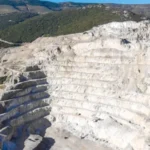
- Quarry: high-purity calcite is extracted from licensed reserves and selected for whiteness and low iron content.
- Crush: the ore is reduced in primary and secondary crushers to a manageable feed size.
- Wash: washing removes surface clay and impurities, protecting final brightness.
- Grind: the material is micronized in high-performance mills to the required fineness.
- Classify: air classifiers separate the powder into precise particle-size distributions, and grades can then be surface-coated if needed.
The grinding and classifying stages determine the final particle-size distribution, which drives performance in the end system; see our micron size guide for detail.
Turkey as a GCC Source
Turkey is one of the world’s foremost sources of ground calcium carbonate, and for good reason. The country’s geology and its mature processing industry combine to deliver consistent, competitively priced GCC to export markets, and Turkish producers now supply GCC to paint, plastics and paper manufacturers across dozens of countries.
- Pure reserves: extensive high-whiteness calcite and marble deposits yield CaCO₃ above 98% with low Fe₂O₃.
- Established industry: decades of mining and micronizing experience mean reliable, repeatable quality.
- Cost advantage: local ore and efficient grinding keep production and landed cost competitive.
- Export logistics: nearby ports connect producers to Europe, the Middle East and Asia.
Aydın Madencilik’s Technology & Quality
Aydın Madencilik grinds all of its GCC from its own licensed reserves on German Hosokawa Alpine mills — among the most respected micronizing and classifying systems in the mineral industry. Owning the reserve and running proven technology gives full control over purity, brightness and particle-size consistency. The Hosokawa Alpine milling and air-classifying line lets the plant hold a tight, repeatable particle-size distribution at each target micron, which is exactly what formulators need to keep viscosity, dispersion and finish predictable from batch to batch.
| Specification | Value |
|---|---|
| CaCO₃ content | 98%+ |
| Fe₂O₃ | Below 0.1% |
| ISO brightness | 93+ |
| Particle size | 3 – 100 µm |
| Milling technology | German Hosokawa Alpine |
| Surface treatment | Natural or stearate-coated |
Every grade is checked in the company’s own laboratory, and each shipment ships with a certificate of analysis. Raw material comes exclusively from Aydın Madencilik’s licensed reserves.
GCC Grades & Applications
GCC is supplied in natural and coated grades across a 3–100 µm range, so a single mineral serves as an economical extender in one system and a performance filler in another. The coating (usually stearic acid) makes the particle surface hydrophobic, which improves dispersion, lowers viscosity and allows markedly higher loading in polymer systems. Choosing between a coarse and a fine grade is a trade-off between cost, smoothness and mechanical performance, so matching the micron to the application is the single most important specification decision.
| Industry | Role of GCC |
|---|---|
| Paint & coatings | Extender pigment for cost, opacity and film build |
| Plastics & masterbatch | High-loading filler for economy and stiffness |
| Paper | Filler and coating pigment for brightness and surface |
| Rubber | Reinforcing and cost-reducing filler |
| Construction chemicals | Filler in adhesives, sealants, renders and joint compounds |
Explore the full grade list and specifications on our calcium carbonate product page.
Export & How to Order
Ordering GCC for export is efficient when you provide your application and volume up front. Aydın Madencilik ships worldwide through Gemlik port, a short haul from the plant on the Sea of Marmara. Because calcium carbonate is heavy relative to its value, a short inland leg to a major port has a real effect on landed cost and also limits the powder’s exposure to moisture before loading.
- Specify the application and micron — paint, plastics, paper, rubber or construction, with your target loading.
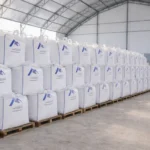
- Give volume and packing — big bags, palletised 25 kg bags or bulk, and annual tonnage.
- Request a sample and CoA — trial the grade and confirm the specification.
- Confirm terms — Incoterms, destination port and lead time.
Begin on our get a quote page and the technical team will do the rest.
Frequently Asked Questions (FAQ)
What is GCC?
GCC stands for ground calcium carbonate. It is made by mechanically crushing, washing, grinding and classifying natural high-purity limestone, calcite or marble — all forms of CaCO₃. No chemistry is involved, so GCC keeps the purity and brightness of the reserve it comes from and serves as the main volume filler across industry.
What is the difference between GCC and PCC?
GCC is ground from natural ore; PCC (precipitated calcium carbonate) is synthesised by a chemical precipitation process that gives controlled particle shapes. GCC is economical with high loading and low oil absorption, while PCC is a costlier functional additive used for rheology and reinforcement. See our GCC vs PCC guide for the full comparison.
How is GCC manufactured?
High-purity calcite is quarried, then crushed, washed to remove impurities, ground in micronizing mills and separated by air classifiers into precise particle sizes; grades can then be surface-coated. The entire route is physical. Aydın Madencilik carries it out on German Hosokawa Alpine mills using ore from its own reserves.
Why source GCC from Turkey?
Turkey has extensive high-whiteness calcite reserves, a mature micronizing industry and competitive logistics. This yields CaCO₃ above 98%, Fe₂O₃ below 0.1% and ISO brightness of 93+ at a competitive landed cost, with straightforward export to Europe, the Middle East and Asia.
What GCC grades are available?
Grades span a 3–100 µm particle-size range in both natural and stearate-coated versions. Finer coated grades suit highly filled polymer systems, while coarser natural grades serve general filling. All micronized grades offer CaCO₃ above 98% and ISO brightness of 93+; the right choice depends on your application and target loading.
What applications use GCC?
GCC is used as an extender and filler in paint and coatings, plastics and masterbatch, paper, rubber and construction chemicals. Its low oil absorption and high bulk density allow high loading with the same resin, reducing formulation cost while contributing opacity, stiffness and surface quality.
How do I order GCC?
Share your application, target micron, annual volume, preferred packing and destination port through our get a quote page. The team recommends a grade, sends a sample and certificate of analysis, and confirms price, Incoterms and lead time, with export through Gemlik port.
Related Guides
More technical content on ground calcium carbonate and its performance:
- Calcium Carbonate Supplier in Turkey — buyer’s guide
- GCC vs PCC — ground vs precipitated calcium carbonate
- What Is Calcite? — complete guide to calcium carbonate
- Micron Size — effect of particle size and distribution
- Calcium Carbonate Products — grades and specifications
- Our Reserves — licensed, high-purity raw material
Partner with a Proven GCC Manufacturer
A dependable GCC manufacturer in Turkey combines its own high-purity reserves, modern grinding technology and rigorous quality control. That is what delivers consistent brightness, purity and particle size in every shipment, at a competitive export price.
The Aydın Madencilik technical team will match the right GCC grade and micron to your application: Request a sample | Explore the product range