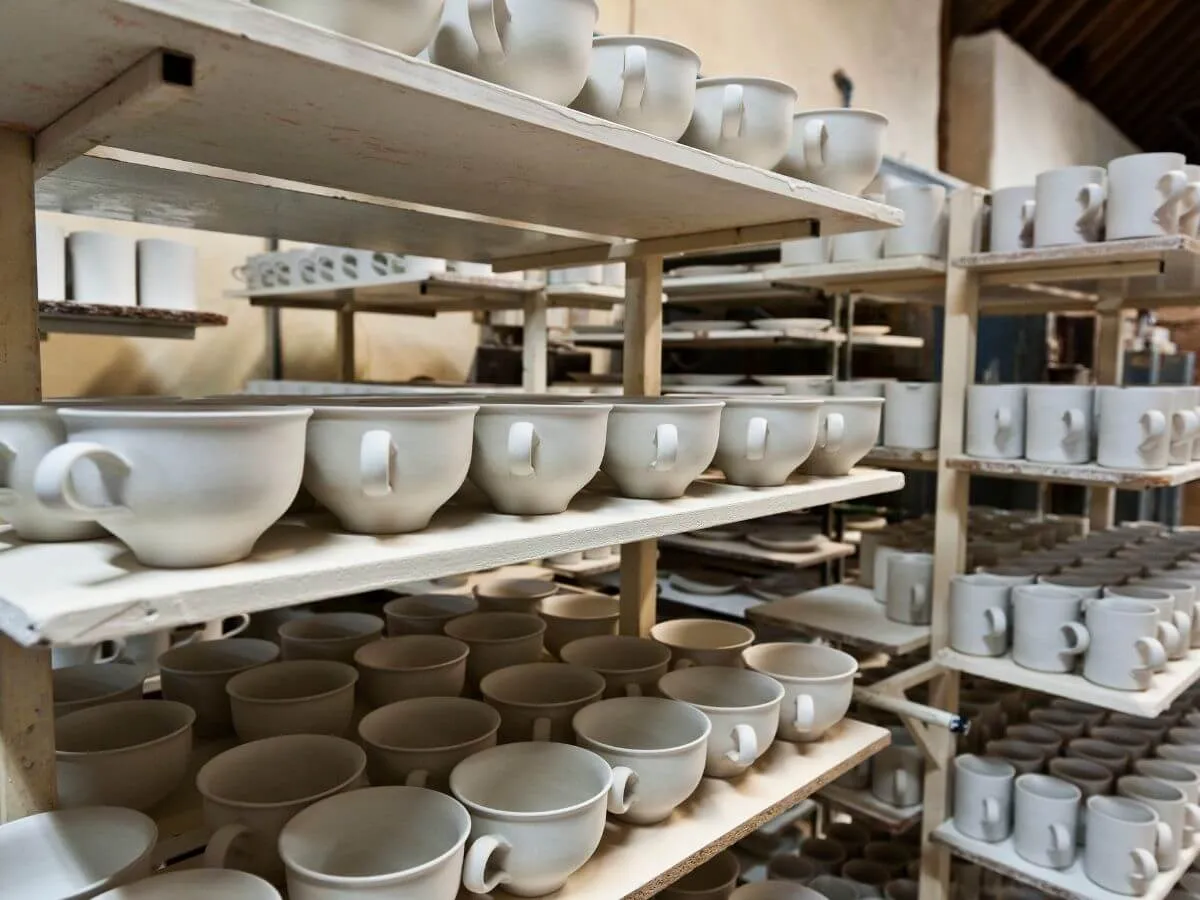
Ceramic and Glass Industry
High-purity natural micronized calcite (CaCO₃) as raw material for ceramic frit, glaze, engobe and soda-lime glass production. 3 grades AY 212, AY 215 and AY 320 — low iron content, tight particle size distribution.
Calcite and Calcium Carbonate in the Ceramic and Glass Industry
Natural micronized calcite (calcium carbonate – CaCO₃) is one of the most important raw materials in the ceramic and glass industry. In ceramic frit production it acts as a flux agent, in glaze formulations as an opacifier, and in glass production as a chemical stabilizer that improves the durability and mechanical strength of the finished glass.
At Aydın Madencilik, we manufacture high-purity natural micronized calcite from our own licensed quarry sites at our Bursa Gemlik facility. Our ceramic- and glass-grade calcite products meet the strict chemical purity, low iron content and particle size requirements of the ceramic and glass sector, and are supplied to ceramic frit producers, ceramic tile manufacturers, sanitaryware producers, container glass manufacturers and flat glass plants across Turkey and Europe.
Ceramic Frit Production
In ceramic frit formulations, calcium carbonate is used as a flux agent that regulates the melting temperature of the frit and improves chemical durability of the resulting glass-ceramic. Our AY 212 (12 µm) and AY 215 (15 µm) natural grades deliver high CaCO₃ purity and consistent results in ceramic frit production, supporting European frit producers serving the porcelain stoneware, wall tile and sanitaryware segments.
Glaze and Engobe Applications
In ceramic glaze and engobe formulations, calcite is a critical raw material that directly influences opacity, gloss and surface quality of the finished tile or sanitaryware. Our AY 215 (15 µm) grade delivers smooth surfaces and consistent opacity values in glaze applications — a parameter that is closely monitored by European tile producers in Sassuolo (Italy), Castellón (Spain), Aveiro (Portugal) and Polish ceramic clusters.
Soda-Lime and Container Glass Production
In glass formulations — including soda-lime container glass, flat glass and tableware glass — calcium carbonate is used as a stabilizer that improves the chemical durability and mechanical strength of the finished glass. Our AY 320 (20 µm) natural grade is preferred for glass production thanks to its high CaCO₃ content and low iron (Fe₂O₃) content — a critical specification for flint and clear container glass production, as iron contamination causes undesired green tint in the finished glass.
Critical Quality Parameters for Ceramic and Glass Calcite
The ceramic and glass industry is particularly sensitive to the chemical purity and consistency of its calcium carbonate supply. The most critical parameters are CaCO₃ percentage, iron (Fe₂O₃) content, magnesium (MgO) content, moisture, and particle size distribution. Every production batch at our Bursa Gemlik facility is analysed in our on-site laboratory for these specifications — supporting the demanding requirements of European ceramic and glass producers with certificates of analysis.
Why Choose Aydın Madencilik for Ceramic and Glass-Grade Calcite?
High-purity calcite stone from our own licensed quarry sites is micronized using German Hosokawa Alpine technology and quality-controlled to ceramic- and glass-grade specifications. Operating from our 15,000 m² production facility in Bursa Gemlik, Turkey, since 1999, we provide consistent batch-to-batch chemistry and tight particle size distribution. Proximity to Gemlik Port enables direct maritime shipments to European ceramic and glass producers in Italy (Sassuolo tile cluster), Spain (Castellón tile cluster), Portugal, Germany, France, Czech Republic (Bohemian glass), Poland and the United Kingdom.
Calcium Carbonate Ceramic and Glass Industry Advantages in the Industry
High Chemical Purity
High CaCO₃ percentage with consistent batch-to-batch chemistry — meeting the strict purity requirements of European ceramic frit producers and glass manufacturers.
Low Iron (Fe₂O₃) Content
Carefully controlled low iron content (<0.1% Fe₂O₃) — a critical specification for clear and flint container glass, flat glass and white ceramic glaze applications where iron causes undesired colour tint.
Tight Particle Size Distribution
Hosokawa Alpine micronization delivers a narrow particle size distribution between 12 and 20 microns, supporting consistent melting behaviour in ceramic frit and homogeneous glaze application.
Laboratory-Backed Certificates of Analysis
Every production batch is analysed for CaCO₃ %, Fe₂O₃, MgO, moisture and particle size distribution — providing the certificates of analysis required by European ceramic and glass producers.
European Logistics Advantage
Located in Bursa Gemlik with direct access to Gemlik Port, we deliver fast maritime shipments to European ceramic and glass clusters in Italy (Sassuolo), Spain (Castellón), Portugal, Germany, the Czech Republic, Poland and the United Kingdom.
Ceramic and Glass Industry Frequently Asked Questions
What is calcite used for in the ceramic industry?
Calcite (calcium carbonate) is used in the ceramic industry as a flux agent in frit production, as an opacifier in glaze formulations and as a raw material in engobe production. Aydın Madencilik’s AY 212, AY 215 and AY 320 natural calcite grades, produced from our own calcite quarries at Bursa Gemlik, are used by ceramic tile, sanitaryware and frit producers across Turkey and Europe.
Why is calcium carbonate used in glass production?
In glass formulations, calcium carbonate serves as a chemical stabilizer — improving the chemical durability and mechanical strength of the finished glass. Our AY 320 natural calcite grade is preferred in glass production thanks to its high CaCO₃ content and low iron (Fe₂O₃) content, a critical specification for clear and flint container glass, flat glass and tableware production.
What are the quality standards for calcite in the ceramic and glass industry?
The ceramic and glass industry is particularly sensitive to the chemical purity of calcium carbonate. The most critical parameters are CaCO₃ percentage, iron (Fe₂O₃) content, magnesium (MgO) content, moisture and particle size distribution. Every batch produced at our Bursa Gemlik laboratory is analysed for these specifications, with certificates of analysis available on request — meeting the demanding requirements of European ceramic and glass producers.
Which micron size of calcite is used in ceramic frit production?
Ceramic frit production typically uses calcite between 12 and 15 microns. Our AY 212 (12 µm) and AY 215 (15 µm) natural grades deliver high purity and consistent melting performance in frit formulations — used by European frit producers serving the porcelain stoneware, wall tile and sanitaryware segments.
What is your logistics advantage for calcite supply to European ceramic and glass producers?
Our facility is located in Gemlik, Bursa, with direct access to Gemlik Port. This enables fast maritime shipments to the European ceramic tile and glass clusters in Sassuolo (Italy), Castellón (Spain), Aveiro (Portugal), Germany, Czech Republic (Bohemian glass), Poland and the United Kingdom. Container, big bag and bulk delivery options are available.
Ceramic and Glass Industry Images